
ABSOLUTE HOME DESIGN · WALL DECOR & ART Should Wall Art Match the Rug? How to Coordinate Colors, Patterns & Room Style Use the rug you already own to choose artwork with a clear connection—and enough character of its own. Affiliate disclosure: This article contains affiliate links. If you buy through them, we may earn a commission at no extra cost to you. As an Amazon Associate I earn from qualifying purchases. You like the rug. It works with the sofa, the room feels comfortable, and now the empty wall is the part you cannot settle. Should the artwork repeat the rug’s colors? Is another pattern too much? Would something completely different look out of place? The short answer Wall art does not need to match the rug exactly. It can connect through a small shared color, compatible undertones, a similar mood or deliberate contrast. Consider the sofa, walls and flooring too: the rug is part of the room, not the only reference. Repeating every color in the same proportions c...
Absolute Home Design · Small-Space Room Planning
How Much Furniture Is Too Much for a Small Room? — Build a Space Budget Before You Buy or Rearrange
There is no useful universal number of furniture pieces that makes a small room “too full.” The better question is whether the room still has enough usable space to support the activities, storage and movement you actually need.

Furniture is only one demand on a small room. Functions, storage and usable open space draw from the same finite space.
Your room has a space budget
A small room has a finite amount of physical space, but not all of it is available for furniture. Doors need to operate. Storage needs to be accessed. Chairs need to be used. People need somewhere to stand, sit, work and move.
EVERY FUNCTION HAS A SPACE COST
1. Stop counting pieces of furniture
Three poorly scaled or poorly placed pieces can overwhelm one room, while a larger number of appropriate pieces may work in another. A simple furniture count ignores size, placement, function and how each item is actually used.
Instead, think in terms of demand on usable space. A piece earns part of the room not merely because it fits there, but because it helps the room perform an important job without preventing other important jobs from happening.
2. Separate physical floor area from usable space
A room's dimensions tell you its physical size. They do not tell you how much of that space can comfortably be committed to furniture. Fixed features, access points and the activities performed in the room all affect what remains usable.
This is why our earlier principle FITS ≠ WORKS still applies. A sofa, desk and storage unit can each fit individually while their combined demands leave the room awkward to use.
3. Furniture consumes more than its footprint
A desk occupies the rectangle under the desk, but working there also requires a chair and enough room to use it. A cabinet occupies floor or wall space, but its doors or drawers must remain accessible. Seating needs to be approached and used.
So when you evaluate a piece, do not ask only, “How big is it?” Ask: What space does this piece require when someone is actually using it?

Too much furniture is not a fixed number of pieces. It is a conflict between what occupies the room and what the room still needs to support.
4. Functions belong in the budget too
Sleeping, relaxing, working, dressing, reading, entertaining and other activities all ask something from the room. Some require dedicated furniture; others require temporary open space or access to storage.
The mistake is treating open floor area as space that has not yet been “used.” In a functioning room, open space can be doing an important job: making furniture accessible, allowing activities to happen and preventing one function from blocking another.
5. Storage can solve one problem while creating another
Storage is necessary, but every freestanding cabinet, shelf or organizer also makes a claim on the room. If storage expands until it undermines the room's primary functions, the space budget is overloaded even if the room looks organized.
The question is not “Can I add more storage?” but “Does this storage justify the usable space it consumes?”
6. Signs your small-room space budget is overloaded
You may be asking too much of the room when furniture can only be used by moving another piece first, storage is difficult to access, one activity routinely blocks another, rarely used furniture occupies valuable space, or the room has so little usable open area that everyday tasks feel awkward.
Those are diagnostic signals—not universal measurements. The specific solution depends on what your room must do and which demands matter most.
Get the Free AHD Small-Space Function & Furniture Audit
Identify what your room needs to do, what is consuming its usable space, and where those demands conflict. After signup, the CA-002 email sequence takes the diagnosis further, including the deeper space-budget exercise for this Content Unit.
Free resource from Absolute Home Design. You’ll also receive practical small-space planning guidance by email. You can unsubscribe at any time.
Measure the budget before you change it
A space budget starts with the real room, not an estimate. Accurate dimensions help you record what physically exists before you decide which pieces or functions deserve the available space.
HOTO Laser Measure — capture the room and furniture dimensions
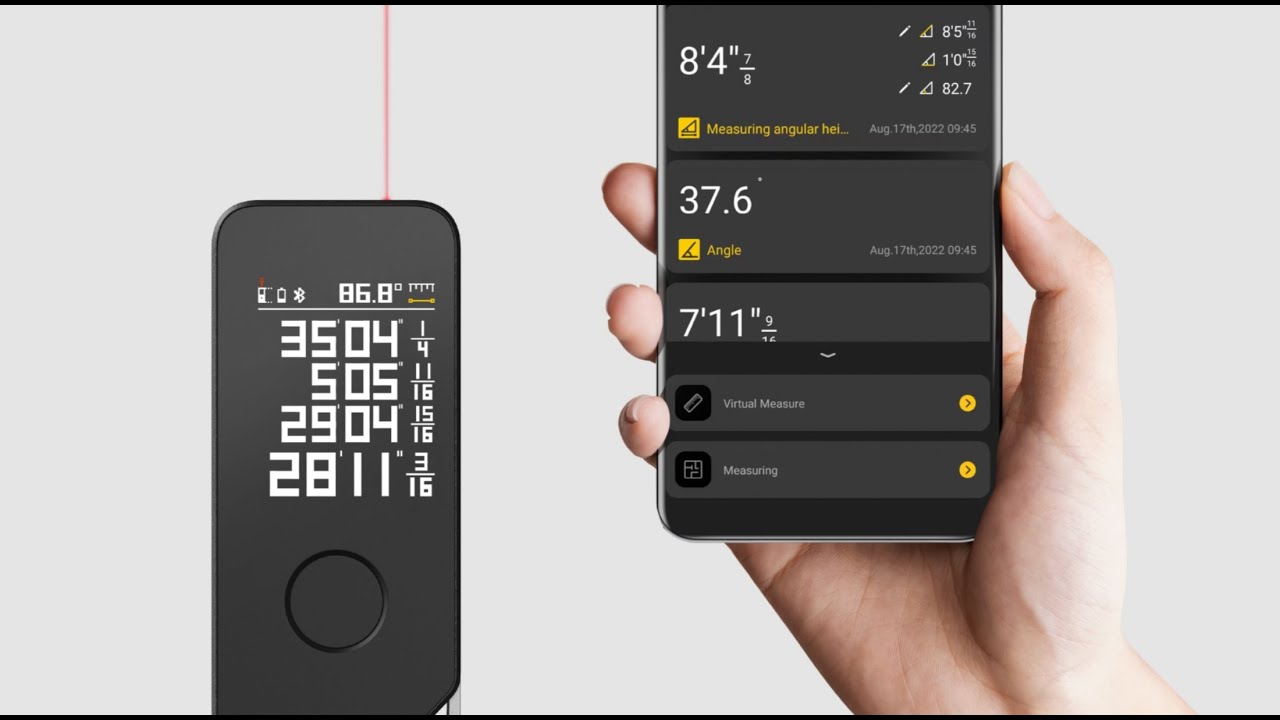 ▶
For room planning, HOTO's Laser Measure is relevant because it gives you a compact way to collect the physical dimensions that form the starting point of the space budget. HOTO currently lists its Laser Measure with a range up to 98 ft / 30 m, stated precision of 1/16 in / 2 mm, metric and feet/inch units, OLED display, USB-C charging and app connectivity.
AHD safeguard: measurement is evidence, not the decision. A dimension can confirm that an item fits physically; it cannot tell you whether the remaining room still works.
Explore HOTO Measuring ToolsAlways confirm current specifications and availability on the manufacturer's product page.
Turn the measurements into alternatives
Once the room and major furniture are recorded, a digital model makes the space budget easier to see. Instead of physically rearranging the room over and over, you can test which demands are competing and compare alternative arrangements first.
Coohom — test the room's space budget in 2D and 3D
 ▶
Coohom's current room-planning tools let you enter room dimensions, add doors and windows, place and adjust furniture, and move between 2D and 3D views. For this CU, the useful role is comparison: build the real room, place the major demands into it and see what remains usable before you start moving furniture.
You can also use the model to create alternatives and compare which arrangement better supports the room's required functions. That makes visualization a practical bridge between measurement and a final decision.
VISUALIZATION ≠ VERIFICATION
A digital plan helps you compare possibilities. Before buying or committing, verify the actual room, furniture dimensions, openings and other physical constraints.
Use a complete decision process when the trade-offs get harder
AHD Room Layout Decision Kit — $19.99

The free Audit helps you identify the small-space conflict. The AHD Room Layout Decision Kit is the deeper reusable system for turning room information into alternatives and comparing the trade-offs before you commit.
MAP → DEFINE → RECORD → CREATE → CHECK → COMPARE → DECIDE
Use it when the question is no longer simply whether a piece fits, but which combination of furniture, functions and usable space produces the stronger overall room decision.
See What's Inside the Decision Kit Get the Decision Kit — $19.99So, how much furniture is too much?
Too much furniture is not a universal count. It is the point at which the combined demands of furniture, storage and required activities leave the room unable to support the way you need to use it.
Before removing a piece or buying a smaller replacement, identify the room's essential functions, record what is consuming the space, and determine which demand is creating the conflict.
EVERY FUNCTION HAS A SPACE COST
Affiliate disclosure: Some links on this page are affiliate links. If you purchase or sign up through them, Absolute Home Design may earn a commission at no additional cost to you. We recommend tools only when they are relevant to the room-planning problem being discussed.
Absolute Home Design — Design It. Build It. Make It Home.


 Ko-fi — Support our work
Comments
Post a Comment